
WASP Water Air Surge Protection Valve
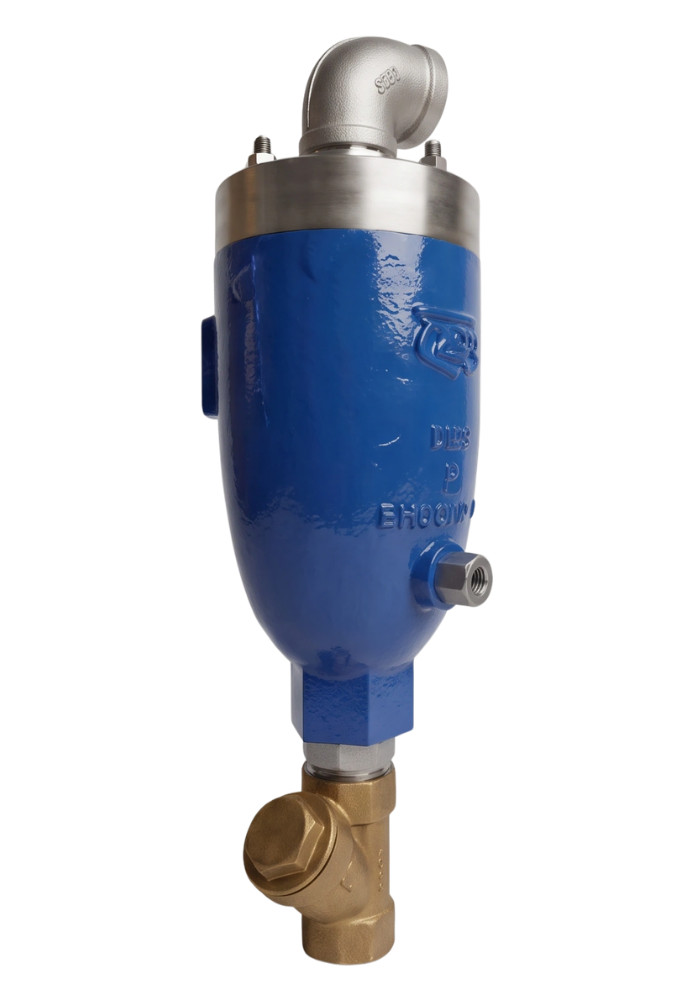
The WASP Valve is a specialist water air surge protection valve designed for installation at the top of a building riser. It combines automatic surge protection, vacuum protection and controlled air release in one compact device, helping protect the riser as pumps start and stop and as the system fills or drains.
01
How the WASP Valve Protects Your System
The WASP Valve combines three protection functions in one device.
Automatic Surge Protection
Water Hammer Protection
Sudden changes in water velocity can create pressure transients known as water hammer.
The WASP Valve helps dampen these effects during pump start-up and system filling, reducing hydraulic shock transmitted through the riser.
Vacuum Protection
Pump Shutdown Protection
When a booster set shuts down and the riser drains, negative pressure can develop.
The WASP Valve admits air through its large orifice to help prevent damaging vacuum conditions.
Controlled Air Release
System Fill Protection
As the riser fills, trapped air must be released.
Air escapes through the valve’s anti-surge orifice, slowing the approaching water column and reducing pressure transients as the air valve closes.
02
One Valve, Three Protection Functions
|
System condition
|
WASP function
|
Purpose
|
|---|---|---|
|
Pump start-up
|
Surge protection
|
Helps reduce water-hammer effects
|
|
System filling
|
Controlled air release
|
Manages trapped air and the approaching water column
|
|
Pump shutdown
|
Vacuum protection
|
Admits air as the riser drains
|
Protect the Complete Riser
Designed for Commercial Building Water Systems
In multi-storey buildings, pumped water risers can experience substantial changes in pressure and water velocity as booster pumps start, stop or recover after a power interruption.
A correctly selected WASP Valve provides automatic protection at the top of the riser, helping manage air movement, hydraulic surge and vacuum conditions.
03
WASP Valve Applications
High-Rise Buildings
Protection for pumped cold-water risers in multi-storey developments.
Pressure Boosting Systems
Riser protection where booster sets distribute water vertically.
Hotels & Apartment Developments
Protection for larger vertical water-distribution systems.
Hospitals & Healthcare
Riser protection for suitable pumped water systems.
Offices & Commercial Buildings
Water-riser protection within commercial building-services installations.
System Upgrades
Retrofit where existing risers need better surge, air or vacuum management.
Pump service & maintenance →
04
Selecting the Right WASP Valve
|
Parameter
|
Value
|
|---|---|
|
Connection size
|
25 mm / 1 inch
|
|
Standard pressure rating
|
PN10
|
|
Higher pressure
|
Versions up to PN40 available on request
|
|
Connections
|
1 inch BSPF (system and drain)
|
|
Weight
|
1.6 kg
|
|
Minimum pressure
|
0.3 bar
|
|
Temperature range
|
4°C to 70°C
|
|
Maximum riser diameter
|
200 mm*
|
* The published 200 mm figure is based on a maximum vacuum of 0.1 bar, corresponding to a riser draw-down flow of about 55 m³/h. Actual airflow is difficult to estimate, so suitability depends on the specific riser and operating conditions and each system should be assessed. Not every 200 mm riser will suit the same valve arrangement.
05
Typical WASP Valve Installation
Tricel’s delivery approach addressed both the technical and the logistical challenges of the project. The work was carried out in three stages:
Installed at the Top of the Riser
The WASP Valve is positioned at the top of each riser that needs protection, so it can manage air movement as the system fills and drains.
- Flush the system thoroughly before the valve is installed.
- Provide an isolating valve so the riser can stay in service during maintenance.
- Fit unions on the system and drain connections. The system-side union sits between the isolating valve and the Y strainer.
- Install the valve where it can be reached and removed easily for maintenance.
The diagram is simplified. Follow the current installation instructions for the exact arrangement.
Riser
from booster set
Isolating valve
Union
system side
Y strainer
WASP Valve
top of riser
Drain connection
via union
06
Water Hammer, Surge & Vacuum
Water Hammer
Rapid pressure waves caused by sudden changes in water velocity.
Hydraulic Surge
Wider pressure changes resulting from changing flow conditions in the system.
Vacuum
Negative pressure that can develop when water drains from a riser.
Trapped Air
Air pockets that must be released safely as the riser fills.
Controlled System Filling
Riser protection is not only about the valve. After a power failure, or when system pressure falls below a set level, filling a vertical water system too quickly can produce rapid changes in water velocity and pressure.
Booster-set controls should include a controlled system-fill function so the riser refills slowly. See electrical control systems for booster control options.
07
From Assessment to Installation
01
Understand
Review the booster system, riser and operating conditions.
02
Select
Confirm the appropriate WASP Valve configuration and pressure rating.
03
Install
Position the valve at the top of the riser with isolation, unions, strainer and maintenance access.
04
Commission & Support
Confirm operation as part of the complete riser system.
Wastewater Type & Applicable Standards
Standard air valve
WASP Valve
Protection for New and Existing Systems
WASP Valves can be considered for suitable new projects and existing pumped risers. Where an existing installation has water hammer, surge or vacuum problems, the complete system should be assessed rather than adding a valve without understanding the cause. Tricel carries out site surveys of existing pump installations through its pump service and maintenance team.
Useful details:
Booster set details
Riser size
Building height
Operating pressure
Symptoms or operating issue
frequently asked questions
What is a WASP Valve?
WASP stands for Water Air Surge Protection. It is a specialist valve for pumped building water risers that combines automatic surge protection, vacuum protection and air release in one device.
Where is a WASP Valve installed?
At the top of each riser that needs protection, with an isolating valve, unions and a Y strainer so the valve can be isolated and removed for maintenance.
How does a WASP Valve reduce water hammer?
As the riser fills, air escapes through the valve’s anti-surge orifice. This slows the approaching water column and helps reduce the pressure transient as the air valve closes. It reduces water hammer; it does not remove every cause of it.
What happens when the booster pumps stop?
If the riser drains, negative pressure can develop. The WASP Valve admits air through a large orifice to help prevent vacuum conditions in the riser.
Is the WASP Valve only an air-release valve?
No. Air release is one of three functions. The valve also provides surge protection and vacuum protection.
Can a WASP Valve be retrofitted to an existing booster system?
It can be considered for suitable existing pumped risers. The booster controls, system-fill behaviour and pipework should be assessed at the same time, rather than adding a valve without understanding the cause of the problem.
What size WASP Valve do I need?
The current valve is 25 mm (1 inch), PN10 as standard, with versions up to PN40 on request. The published maximum riser diameter is 200 mm, but suitability depends on the specific riser and operating conditions, so each system should be assessed.
WASP Valves in Ireland
Tricel supports commercial building-services projects that need water hammer, surge, air and vacuum protection for pumped water risers. The WASP Valve combines automatic surge protection, controlled air release and vacuum protection in one device.
Talk to our pump team about the booster system, riser configuration and operating conditions, so the requirement can be assessed as part of the complete water-distribution system. For related parts and accessories, see pump spares and ancillaries.
Need to Protect a Pumped Water Riser?
Send us details of your booster system, riser diameter, building height and operating pressure, and our team can review the application.
Call +353 (0)64 668 8040 or email watersales@tricel.ie